Human Immunodeficiency Virus (HIV) and Acquired Immune Deficiency Syndrome (AIDS)
What Is HIV?
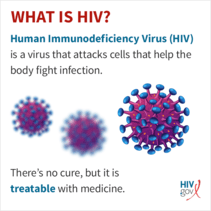
HIV stands for Human Immunodeficiency Virus. It is a virus that attacks the body's cells that fight off sickness. When these cells are attacked, it becomes harder for a person's body to fight off other infections and diseases.
Most people have flu-like symptoms within 2 to 4 weeks after infection. Symptoms may last for a few days or several weeks.
Having these symptoms doesn't mean you have HIV. Other illnesses can cause similar symptoms.
Some people have no symptoms at all. The only way to know if you have HIV is to get tested.
If HIV is not treated, it can lead to a disease called AIDS (Acquired Immunodeficiency Syndrome).
There is no cure for HIV, and the human body cannot get rid of it. This means that once someone has HIV, they have it for life. The good news is there are good medicines for HIV (called Antiretroviral Therapy, or ART). People with HIV who take their medication correctly and keep their viral load "undetectable," meaning the virus is so low that tests can't find it, can live long and healthy lives and will not spread HIV to their partners through sex.
How do I get it?
Most people who get HIV get it through anal or vaginal sex, or by sharing needles, syringes, or other equipment used to inject drugs.
HIV can only be spread through certain body fluids. These fluids include:
- blood, semen (cum),
- pre-seminal fluid (pre-cum),
- rectal fluids
- vaginal fluids
- breast milk
For HIV to spread, these fluids must touch a moist tissue lining of the body (a mucous membrane), get into damaged tissue, or be injected right into the bloodstream with a needle or syringe.
Some things can increase the chances of getting or spreading HIV. These include a person's viral load (the amount of virus in the blood), having other sexually transmitted infections (STIs), or using alcohol or drugs.
HIV is not spread by:
- Air or water
- Mosquitoes, ticks, or other insects
- Saliva, tears, sweat, feces, or urine that is not mixed with the blood of a person with HIV
- Shaking hands; hugging; sharing toilets; sharing dishes, silverware, or drinking glasses; or engaging in closed-mouth or “social” kissing with a person with HIV
- Drinking fountains
- Other sexual activities that don’t involve the exchange of body fluids (for example, touching).
- Donating blood
HIV can’t be passed through healthy, unbroken skin.
How do I prevent it?
Today, more tools than ever are available to prevent HIV.
Prevention strategies include:
- Using condoms the right way every time you have sex.
- Never sharing needles, syringes, or other drug injection equipment.
- Using PrEP (pre-exposure prophylaxis) and PEP (post-exposure prophylaxis).
If you have HIV, there are many ways to prevent transmitting HIV to others, including taking HIV treatment to get and keep an undetectable viral load.
How do I treat it, if I have it?
There are good medicines for HIV (called Antiretroviral Therapy, or ART). You should start HIV treatment as soon as possible after diagnosis.
If a person takes the medicine exactly as their doctor tells them, it can lower the amount of HIV in the blood (this is called the viral load) to a very low level. This is known as viral suppression.
People with HIV who use this medicine correctly and keep their viral load "undetectable" (meaning the virus is so low that tests can't find it) can live long and healthy lives and will not spread HIV to their partners through sex. Having an undetectable viral load also reduces the risk of HIV transmission through sharing drug injection equipment, and during pregnancy, labor, and delivery.
Please click on a link below for more information:
- How To Report for HIV
- Data and Surveillance
- Care and Support
- HIV Cluster and Outbreaks
- HIV Cluster and Outbreak Detection and Response
Contact
For more information on HIV, or other sexually transmitted infections, call 304-558-2195.
Trained professionals are available to speak with you on weekdays (except holidays) from 8:00 am to 4:00 pm to answer questions about HIV and other STDs in West Virginia, how to protect yourself, how to be tested, and how to get treatment.